OTSA meets each year. Usually, the location alternates between Holy Cross Greek Orthodox School of Theology, Brookline, Massachusetts and St. Vladimir's Orthodox Theological Seminary, Crestwood, New York. On occasion, the annual meeting of OTSA has been held in Chicago as well. The sessions of the annual meeting are generally open to the public, unless the meeting planners decide to close a particular session. The business meeting of the society is for members only.
The 2026 OTSA Conference on the theme of “The Council of Crete (2016) after Ten Years,” was held June 11-13, 2026 at St Vladimir’s Orthodox Seminary.
After decades of preparation and preliminary meetings, a large panorthodox council was convened by the Ecumenical Patriarch and was held in 2016 on the island of Crete. The participants deemed it a “great and holy council” marking a major move to return to the worldwide Orthodox Church’s synodal mode of functioning. Although involved in the preconciliar discussions, some Orthodox churches—Antioch, Georgia, Moscow, Bulgaria—chose for various reasons not to participate. However one chooses to consider the Council in Crete, it is obvious that both the event itself and its ongoing reception are significant and warrant serious discussion.
For its 2026 meeting the Orthodox Theological Society of America (OTSA) explored papers and panels that offered different perspectives on the Council in Crete and its ongoing reception.
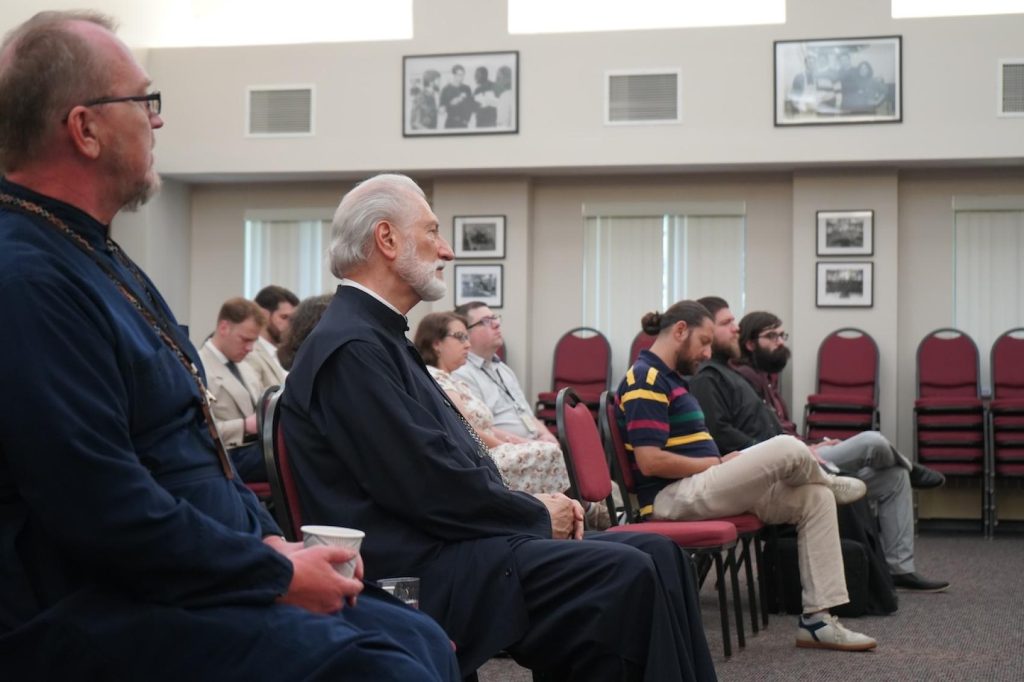
OTSA Florovsky Lecture Invites Reflection on Council of Crete
Ten years removed from “The Holy and Great Council,” how should the large pan-Orthodox council, convened by the Ecumenical Patriarch and held in 2016 on the island of Crete, be remembered? What lessons have we learned? What can we see more clearly now, in retrospect?
The Council of Crete’s legacy was the subject of OTSA's Florovsky Lecture for 2026, hosted on the campus of St. Vladimir’s Seminary. His Grace Bishop Maxim (Vasiljević), who was present at the council in 2016, delivered a magnificent lecture.
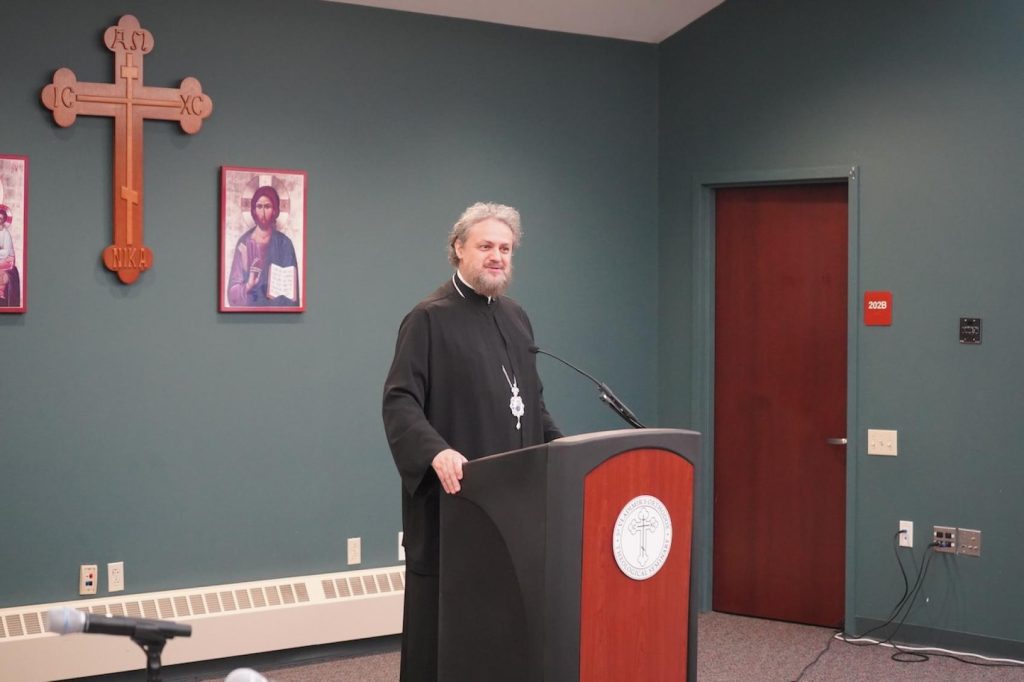
“I can tell you that from the very first session, the experience was unlike anything I had anticipated. …” His Grace remarked. He went on to express what he believed the council was and was not, but emphasized any evaluation of its significance must be measured against a proper understanding of conciliarity.
“Synodality in the deepest patristic sense is a theological reality before it is an institutional one. It relates to Pentecost, to the Eucharist, to the gathering of the dispersed children of God into one body. From this perspective, the Council of Crete was not diminished by the absence of four Churches or by procedural imperfections,” said Bishop Maxim. “What made it a council was the daily Eucharist, the genuine theological encounter, the charismatic atmosphere which I can testify to personally. The grace of the Holy Spirit was palpably present in the hall, and bishops who had never met once one another discovered that they shared not merely an administrative communion but a living faith.”
Bishop Maxim has also written about his experience in Crete in the book Diary of the Council: Reflections from the Holy and Great Council (Sebastian Press, 2016).
Bishop Maxim was originally one of four panelists, all of whom were present at the council, set to present at this year’s Florovsky Lecture. Due to unforeseen circumstances, however, the other speakers, Very Rev. Protopresbyter Dr. Nicolas Kazarian, Dr. Elizabeth Prodromou, and Very Rev. Dr. Alexander Rentel, were unable to participate as planned. We hope to bring them all back for a virtual event in the coming months to continue the discussion.
“[OTSA] was originally an association that put together the two faculties of two seminaries in North America: Holy Cross from Boston and St. Vladimir’s from New York. …” Dr. Tudorie noted. He pointed to the 2026 gathering at St. Vladimir’s Seminary as an opportunity to renew and strengthen those ties. “I am very happy that this was possible and I'm looking forward to more,” he added.